Followers

Friday, 31 March 2023

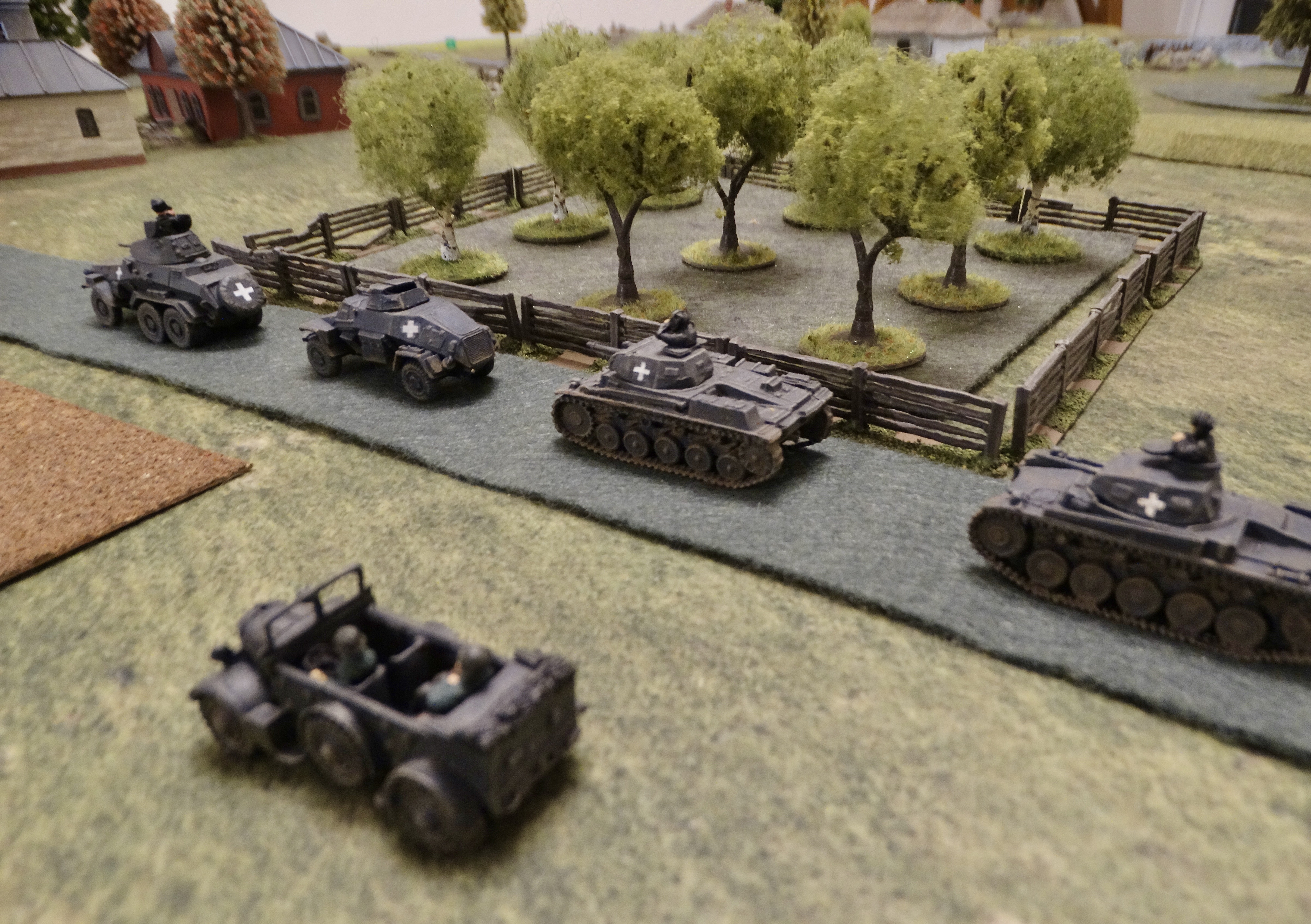
Clear The Woods September 1939

Here we go with another WW2 scenario, played using my WRG 1973 revised rules. This time I was fortunate to have a live opponent - many thanks to Steve for coming over and helping out. If anyone finds the title and map of this scenario ringing some bells, both belong to a Napoleonic skirmish scenario laid out in WSS magazine a year or two ago. The original magazine is, alas, long lost, so I can't refer readers to the source.

Suffice to say that the Germans are attacking from the west, entering the table on move 1 along the two roads (sectors A and B on the map). Force A is based around a Combat Engineer platoon, force B is based around a Kradschutzen platoon. Their overall objective is to clear the wooded terrain of the enemy, and make a clear path for the tank units following them up. The Poles are there to delay them as long as possible. The four specific objectives are indicated by the red dots on the map, and as indicated in the scenario details the Germans have to take at least 3 of them to win. Game duration would be as long as we decided it was worthwhile - this was, after all, basically a test game.

As usual, the table was 6' x 4'. If anyone needs reminding, the models are 15mm or 1/100th scale. The Poles were free to dig-in as required.


Forces

How It Played
Due to the rules requiring elements of a platoon to stay within 200m of their command element, or 50m from each other, the Poles would need to deploy the cavalry platoon guarding one road, whilst the recce sections guarded the other. Thanks to Steve, I was able to see how my 'dummy counters' rules worked to disguise the details of the Polish deployment (quite well, as it turned out). 

As so often with a new scenario, it turned out to be a little unbalanced, and the Germans had a tough time making progress without proper armoured support. Hence the recommended addition of an under-strength panzer platoon along each road. This should create a more mobile and equal game. You could try more armoured cars if you prefer, giving the Germans a full armoured car platoon of 4 or 5 vehicles down each road to give the Germans a proper chance of punching through the Polish defences.

Overview of the table, with dummy counters in place.

The Germans made reasonable progress on the southern road.

Things were a bit slower on the northern route, due to a nicely
placed artillery strike which caused casualties and disruption.

As dummy counters were revealed, it became necessary to
winkle out Polish opposition.

The leading armoured cars from the southern column reach the ford.

The Polish 'strategic reserve', as Steve called them, take some
mortar fire at the crossroads. Polish AFO seen behind.

The Poles are making a stand at the northern roadblock.

A German airstrike appears, but as so often the effect is limited.

After 7 moves it was time for Steve to head home.
German progress had been halted - it seemed they
needed more mobile firepower to make a breakthrough.

De-Brief
The Poles had won, but it seemed obvious the Germans needed a bit more 'oomph' to make a game of it - unless of course the Polish forces were reduced. So I think adding about 3 German tanks up each road should do the trick - the Germans will be able to overcome the initial Polish defences, giving them time to dismantle or go around the roadblocks before taking on the FT-17s.

This was Steve's first try at these rules, and he seemed to settle into them without too much trouble. He commented on their 'old school' feel, which is hardly surprising considering their vintage. Will he be abandoning Blitzkrieg Commander, his favourite rules of many years? I doubt it, but it seems we have an altenative set of rules with a different figure scale to add variety to our WW2 engagements.

To see Steve's report and his comments on the rules, go over to his excellent blog:


"Til next time!

Wednesday, 8 March 2023

The Action at Rudnik - Poland 1939

For the moment, my main project continues to be developing my variant of the WRG 1973 Armour and Infantry rules. Tweaking the morale rules (or 'reaction' as the rules call it) had been causing me some trouble, but I thought I now had it figured out.

I decided to test things out using a full-blooded attack-defence game with a battalion-sized German Kampfgruppe attacking a Polish position. I hope any readers gaming WW2 will find the scenario of interest, regardless of the rules you are using.

The terrain map (6' x 4' table) is shown below. 


The Germans are coming from the south, and are looking to open up the routes to the north. They need to capture Rudnik and force a crossing of the bridge. 

All the hills are classed as 'low', which means that they are just representing folds in the ground or low rises which block line-of-sight but have no other effect on the game. The narrow river is crossable by infantry, but vehicles will roll as they wade: a 1 or 2 and they are stuck. The pillboxes hold an MMG each. The defenders can dig-in as required. Polish reinforcements dice from move 2, needing a 5+ to arrive. If they fail, they try again next turn on a 4+, and so on. Arrivals dice 50-50 to see which road they will arrive on.

The forces were:

German - 'Kampfgruppe Meyer' (attacking from the south)
Kampfgruppe HQ - Command group in radio truck

Panzer Company HQ - 1 x panzer I command tank
2 x light panzer platoons - 3 panzer II, 2 panzer I
1 x heavy panzer platoon - 2 x panzer II, 2 x panzer IV, 1 x bunkerflak (attached)

Infantry company HQ - 1 x light truck with radio
3 x infantry platoons each - 1 x platoon command group, 3 x rifle group, 3 x rifle/lmg group, 1 x 5cm mortar group, 1 x anti-tank rifle group, 1 x MMG group

Recce section - 1 x sdkfz 231 (6 rad), 1 x sdkfz 222

Anti-tank section - 1 x light truck with command group, 2 x towed pak 36

Off table mortars - 6 x 8cm mortars with on-table MFO
Off table artillery - 4 x 10.5cm howitzers with on-table AFO

Polish (defending. Placed up to 700m/28" from north table edge)
HQ - Company command group in truck with field telephone

2 x infantry platoons each - 1 x platoon command group, 6 x rifle group, 3 x rifle/lmg group, 1 x 46mm mortar group, 1 x anti-tank rifle group, 1 x 37mm anti-tank gun with tow. Right flank platoon also has a towed 75mm field gun attached.

MMG section (attached to left flank platoon) - 2 x MMG group

Attached tank platoon - 4 x Renault FT-17

Reinforcing tank platoon - 4 x 7tp

Reinforcing recce section - 2 x Wz-34 armoured cars

On-table mortar section - 2 x 8cm mortars with command group and MFO (telephone only)
Off table artillery - 4 x 75mm field guns with on-table AFO


Photos of the Battle

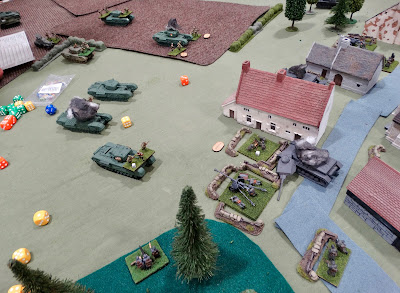
A Polish 75mm field gun waits in Rudnik

The Polish positions in Rudnik.
Many infantry bases were inside the houses.

Polish positions around the bridge.

Overall shot before game start. 

The pre-game barrage fell on Rudnik and was deadly.
Many infantry elements were knocked out and the platoon fell back.

German armour races forward past the orchard.

Polish artillery claims a truck on the German left flank.

Tank platoon with infantry on the German right.

As the Poles fall back, German armoured cars enter Rudnik.

The Germans edge forward towards the bridge.
The pillboxes are pounded with suppressive fire.

Polish reinforcements (the 7tp platoon) enter the table,
passing by the Polish mortar position.

Overview in mid-game.

The Germans press forward to the bridge, firing as they go.

Polish casualties around the bridge include
a 37mm anti-tank gun and an FT-17.

At last the German infantry close up to the stream, 
only to be bracketed by Polish mortar fire.

The Poles evicted from Rudnik manage to fight back.
German armour burns in the village square.

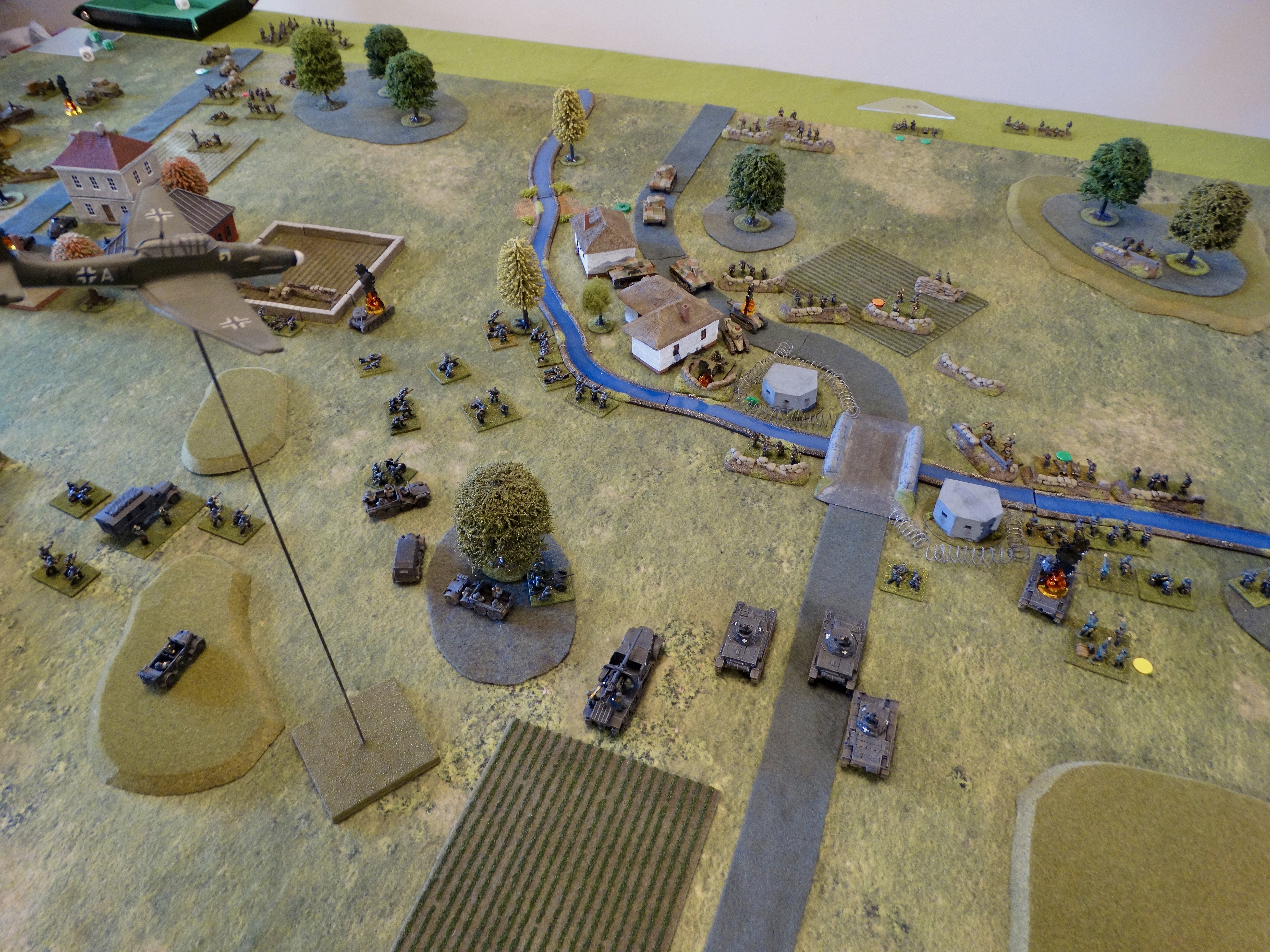
A Stuka strike arrives over the bridge area.

The Poles at the bridge are under pressure but holding...

...They have the support of both tank units.

After 6 moves I stopped the game. Rudnik is in German hands,
with Polish armoured cars acting as rearguard for the retreating infantry.

Conclusions
Even playing solo it had been a fun game, with the rules nicely tested out. The reaction rules seem to be fixed, and most other issues were minor. 

Usually I show knocked out tanks and guns with grey-dyed soft toy stuffing. For this game I used my new Litko 'flaming wreckage markers'. I like the way they catch the light and give the illusion of flames.

The Germans had taken Rudnik, and after a struggle the Poles at the bridge were finally beginning to crack, with the infantry platoon falling back. But the FT-17s and 7tps would doubtless make the Germans pay if they tried to rush the bridge. However, the bridge position was now outflanked to the west and I decided the Poles would pull out to avoid being trapped. A German victory.

'Til next time!

Friday, 3 March 2023

The Cotswold Wargaming Day 2023

Cotswold Wargaming Day 2023
Sunday 15th October
The Westwoods Centre
Bassett Road
Northleach
Cheltenham
Gloucestershire GL54 3QJ

09.00 - 17.00

A close-up of last year's 'Best Game'.

And so, year five of this event beckons. The formula will remain much the same as in previous years. All those on the mailing list have received an email with the details. If you are not one of those, you can just turn up on the day if you wish (all wargamers are welcome), or leave your email in the comments section if you are thinking about putting on a game or you need any more info. I will get back to you and will remove your address from the comments afterwards to protect your privacy.

There will be a charge of £10 to attend, to cover costs. Any excess left over will go to charity. Free coffee and biscuits, and the chance to win the Stuart Asquith trophy for best game!
I hope to see you there.

Monday, 26 September 2022

All The Action From CWD2022

Once again, Northleach's premiere annual wargaming event took place on the 25th of September. Thirty-two elite wargamers crowded into the Westwoods Centre in Northleach's leafy Eastend to have fun, and contend for the prestigious Stuart Asquith Trophy. 

By the time I arrived at the centre at 08.30, there were already some keen gamers waiting for the doors to open. Soon there were games being set up, whilst my wife (bless 'er) and I finished getting the tea, coffee and biscuits ready, and I distributed welcome leaflets and flyers for Caliver Books. Many thanks to Dave Ryan of Caliver for coming through yet again and contributing books to be awarded as prizes to deserving gamers.

So, let's check out the 9 games that were being played. With most games I'll be giving the name I had from the booking emails, which sometimes differs from the guy who put in most of the work. Please forgive any errors or ommissions - remembering names has never been my strongpoint.

Game 1
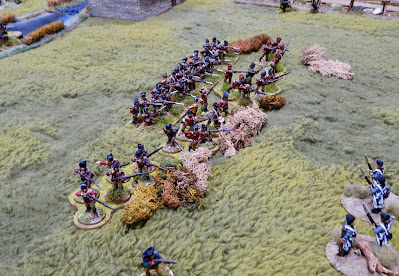
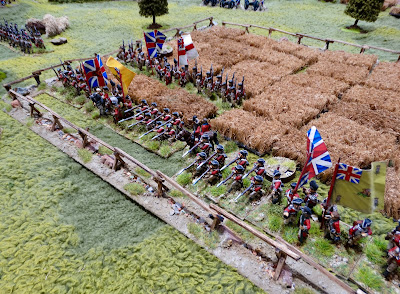
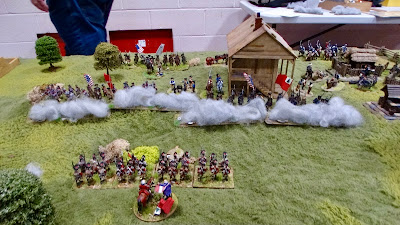
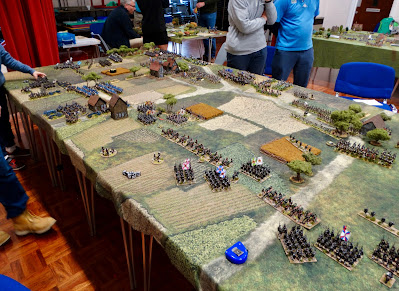
Ian Bailey and colleague brought along a cracking 28mm AWI game set in 1776. They were using the British Grenadier rules. Plenty of action at this 12 x 6 table all day, which looked quite a task for just 2 guys. The quality of the terrain and figures was top notch - and all set up within an hour. 

Still setting up, but the banter has already started...


Game 2
This was a 20mm WW2 game using the Battlegroup Kursk rules, put on by Paul and Matt James. They were using the 'Death's Head at Andreevka' scenario from the rulebook, set in 1943, and using an 8 x 6 table. Paul was also good enough to start the day by taking a couple of hours with one of my other gaming buddies (Jon), to play through the same scenario using the current version of my WRG 1973 Armour and Infantry revision. All very useful. The game featured heavy nostalgia value with Airfix Churchills much in evidence (operated by the Russians), and the old Airfix 'Waterloo Farmhouse' (a.k.a. La Haye Saint) forming part of the village.

Aaah... Airfix Churchills.
Does anyone remember glueing all those bloody bogie wheels?


Jon on the left, Paul on the right.


The old Airfix 'Waterloo Farmhouse' was recognised by many.

Game 3
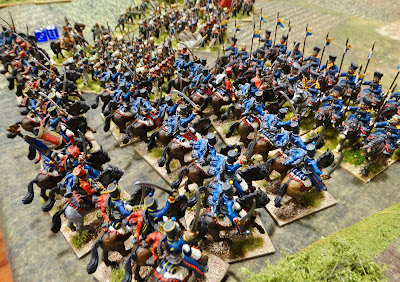
JP returned to CWD with another lovely 28mm Napoleonic display using the General de D'Armée rules. The game used one of the scenarios from the rulebook, the Battle of Möckern, 1813. A great looking wargame with more excellent figures, all painted by JP himself. Table was 12 x 6.


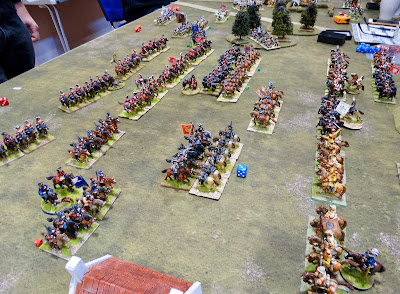
Now That's What I Call A Cavalry Melee (1).


Game 4
Dave Kenyon and friends brought over a Sharpe Practice game set in the Peninsula. A 6 x 4 table, and once again, excellent terrain and lovely 28mm figures. There seems to be a pattern emerging here!


Looks like an important dice roll.


Time For A Break.
Around late morning I decided to have a go shooting a little bit of video, designed as a tour of the hall. I was surprised by the result - everyone was so involved in their games! No bored gamers munching sausage rolls here. And no waving or posing either, just wargamers intent on what they were doing. They didn't seem to notice me pointing the camera at them. So check out a quick tour of the 9 games and the feeling of the hall. Go full screen. You deserve it.

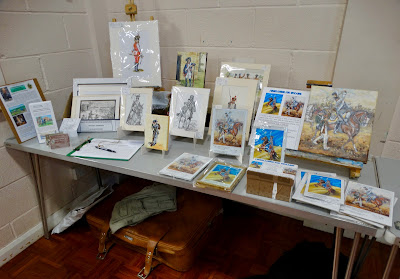
On the subject of taking a break, well known Cotswold wargamer Chris Gregg was present. He didn't bring along a game, but he enhanced the day by bringing along a collection of his artwork and some welcome refreshment. 


What a gent!

Game 5
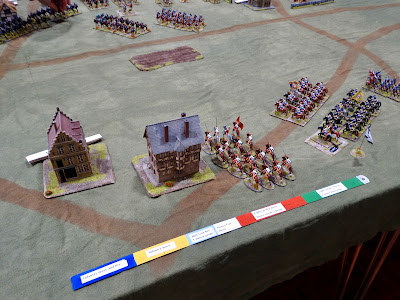
Will Harley is an old friend of the CWD, and brought along his magnificent collection of Spencer Smith SYW miniatures. His re-creation of Charles Grant's Mollwitz game from 1971 has featured on a number of blogs recently, and it was great to be able to see the game 'live'. Table was 10  x 6.

Will Harley (right) in fine form with his firing stick.

Old School gaming aids - so hard to resist.

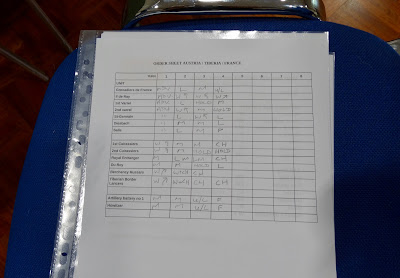
And what's this - order sheets? The years suddenly rolled back.

The order sheets in use.


Game 6
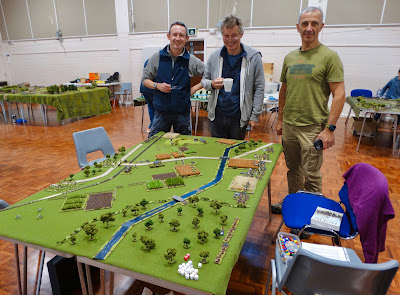
Steve Johnson and Dave Fielder presented a battle from Das Rhubarbe Kriege, the fictional war between the fictional states of Ruthenia and Prusskia, in which the rhubarb fields of Ruthenia are the main objective. This all takes place sometime in the 1860s in Central Europe. They were using Black Powder 2, along with the ACW Glory Hallelujah supplement. Figures were 10mm, on a 6' x 4' table.

Steve's map of the terrain.

Steve, Jon and Dave.


The redoubt was a real problem for the attacking Prusskian forces.
    
"Just hang on a minute..."
   
Game 7
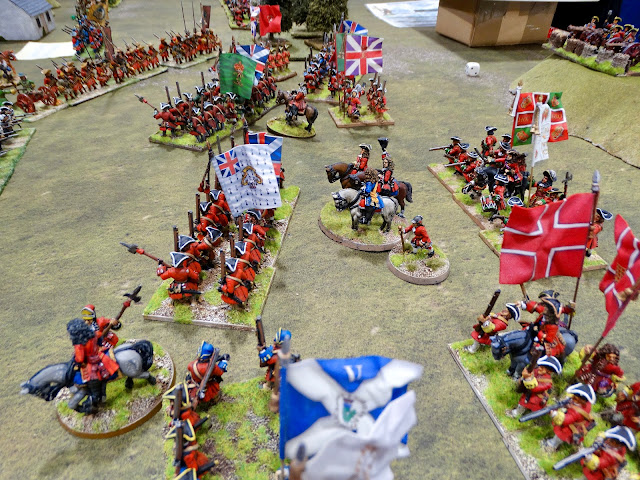
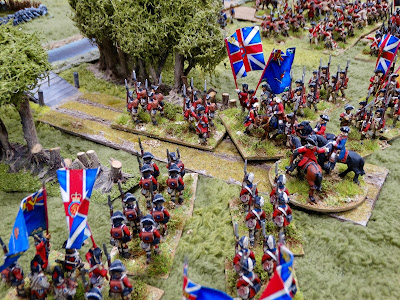
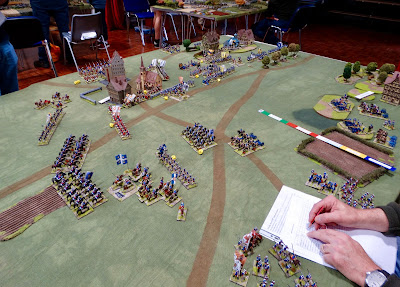
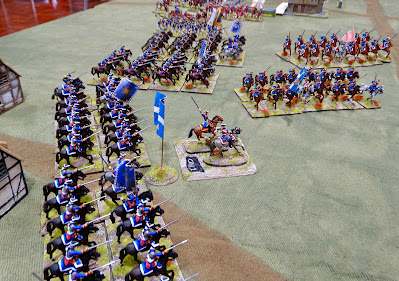
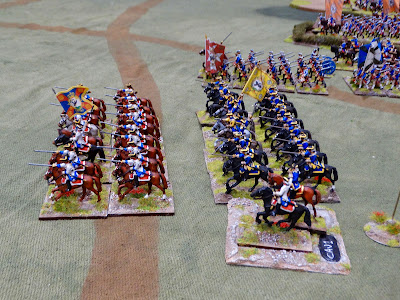
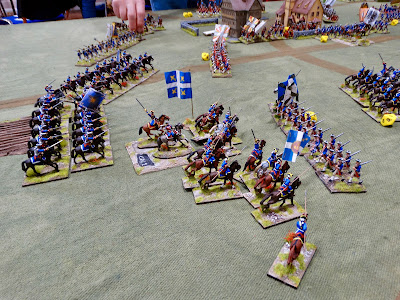
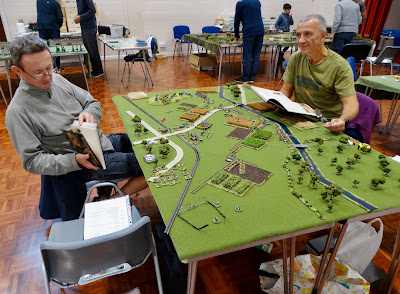
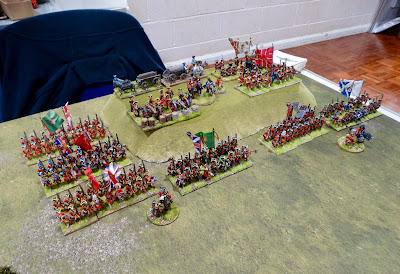
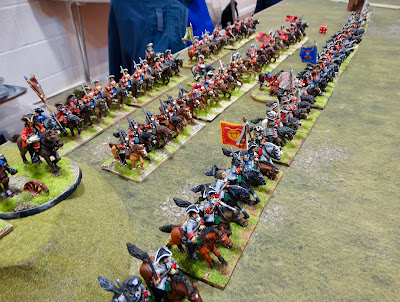
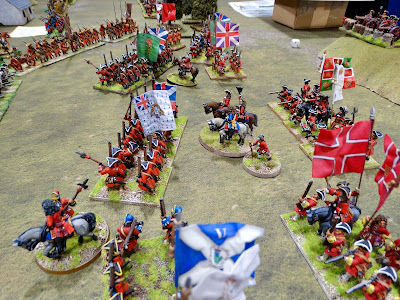
Nigel Vye, with the help of other members of the Cirencester Club, brought along a fine Nine Years War clash set in 1689, representing the real Battle of Warcourt and set on a 12 x 4 table. The Allies under Marlborough are fighting the French. The gamers were using Beneath The Lily Banners to guide their manoeuvres. Again, the beautiful and colourful 28mm figures caught my eye. 


That must be Marlborough amongst the English battalions.

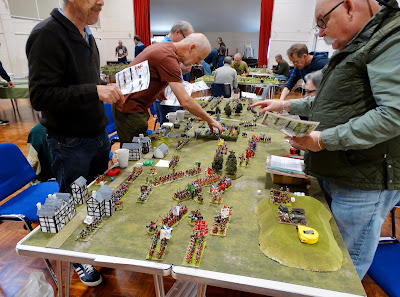
Now That's What I Call A Cavalry Melee (2).

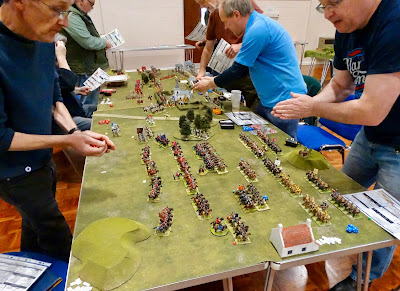
Intense gaming! No sitting down here.

The phrase 'hammer and tongs' comes to mind!

Game 8
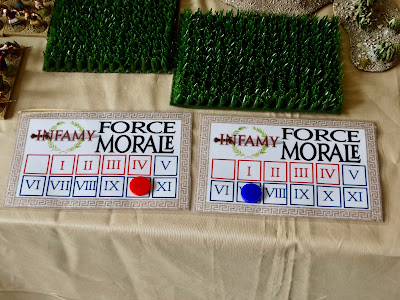
Stuart Surridge led his colleagues in a re-fight of the Battle of Qadesh - or something very similar! They were using the Infamy, Infamy! rules with an 8 x 6 table - and yes, a lot of lovely 28mm figures, including lots of chariots. 
Stuart (right) and his team.

Outstanding representation of the Egyptian camp.


More gaming gadgets. A nice way to track the progress of the game.

And Finally - Game 9
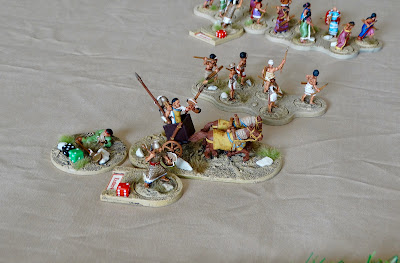
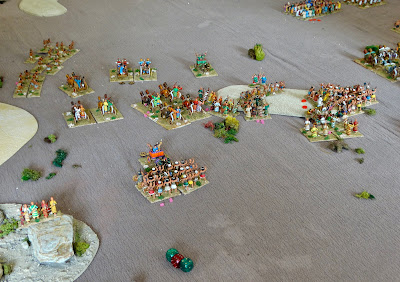
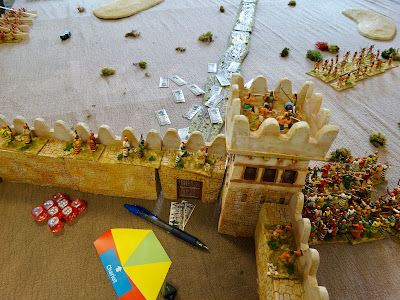
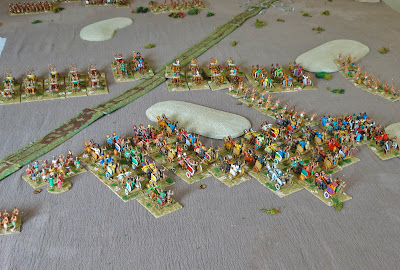
Last year's winner of 'Best Game', Tim Cull, returned to the CWD with another cracking game, entitled 'The Destruction of Yamhad'. This was set in some of the earliest years of what we gamers call the 'Ancient' period, c.1615 BCE. Tim provided a fascinating 2 page background history to this period, concerning which, unsurprisingly, detail for wargaming is usually hard to find. But Tim had constructed a fascinating 2 part scenario around the little that was known, with the result of the first part affecting the second. Tim was using the club rules of the Farnborough Wargames Society, which apparently still lack a snappy title. More top quality 28mm ancients figures were in evedence - and lots and lots (and lots) of chariots. I very much fear Tim and his friends significantly out-charioted the Qadesh game, which was in the same side room. Bad luck Stuart.

Part 1 in progress.

Chariots...

And more chariots.

You guessed it.


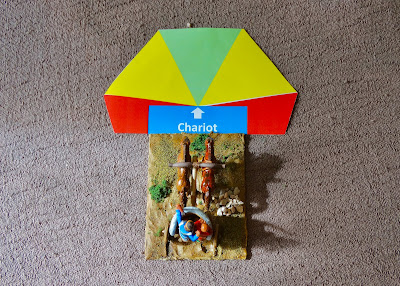
Gaming gadgets again! Tim's 'chariot swerve' device. Nice!

Part 2, from inside the walls of Yamhad.

Outside the walls - a great wargaming scene.

Prizes!
Yes, no CWD would be complete without the prize-giving, which is really just my way of thanking all the gamers who have taken the trouble to bring and set up games for us all to enjoy. I make no apologies for giving another shout-out for Dave Ryan and Caliver books who made these prizes possible - order some stuff from these guys immediately! The company is a great supporter of the hobby. 

And so, without further ado...

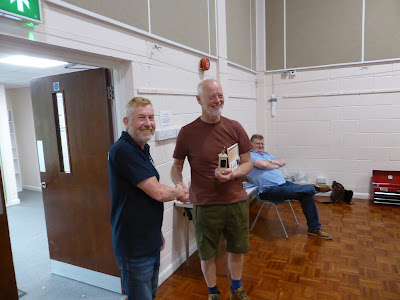
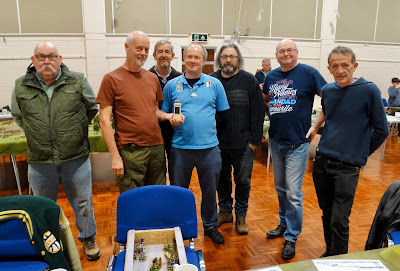
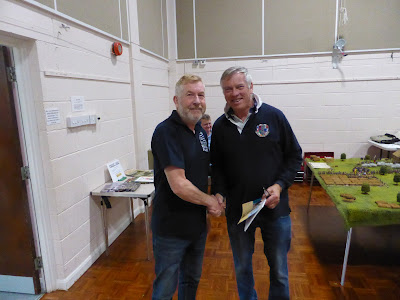
Nigel Vye and his Cirencester compatriots won Best Game.
Keeping 7 gamers involved for around 5 hours is no mean feat.

The winning team, with the Stuart Asquith Trophy.

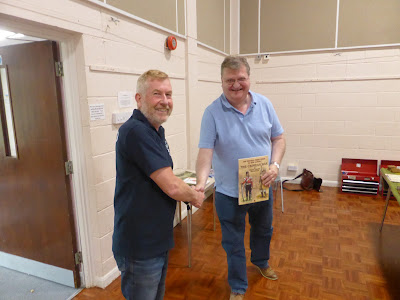
Best Models - Paul James.
Building six Airfix Churchills has to earn you something.

Best Terrain - Ian Bailey.
A fine looking game all round, but it was the flashing gunsmoke that clinched it...


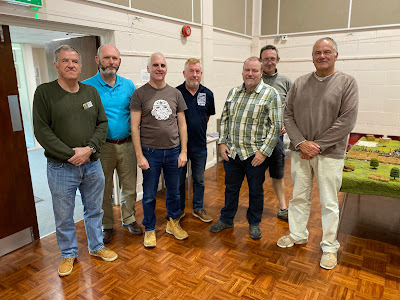
Honourable Mentions - the other 6 gamers that made the day what it was.
Everyone gets to choose a book.

And Finally, Finally...
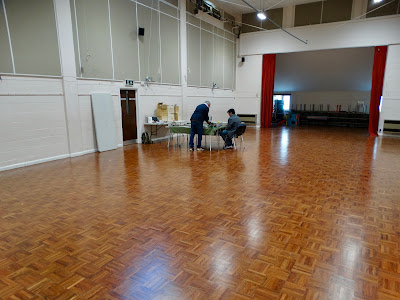
Well, all the biscuits were eaten (the sure sign that Real Wargamers had been present), and it was time to pack up and go home. But some people were enjoying themselves so much they didn't want to go home. This is Paul and Matt refusing to leave until their WW2 game was resolved. Well, I guess I did say 5 o'clock. I salute your stalwart dedication to the cause, gentlemen!


And So We Say Farewell... 
... to another Cotswold Wargaming Day. That's 4 in all so far, and I count all of them as definite successes. Always a friendly and relaxed atmosphere, with excellent games on offer. I continue to be struck by how attendees conjure such fine games from the back of their cars - the terrain is up in 20 minutes, the figures set out in another half an hour, and voilà!, a game that anyone would be proud of. Well done everyone - and I'll see you next year!